
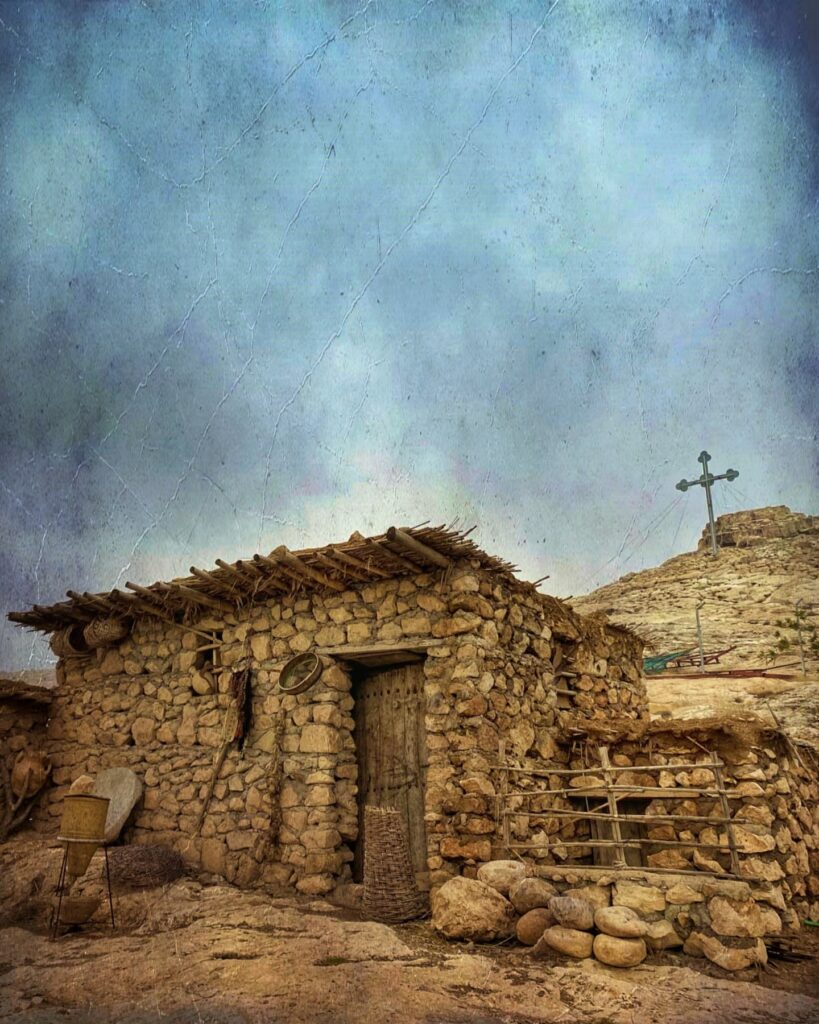
Who are the Kurds?
A guide to the people, the country, the language and the culture, based on a Christian calling to serve this forgotten people.
Read the story ↓The Kurds are one of the oldest peoples in the Middle East and, at the same time, the largest ethnic group in the world without their own internationally recognised state. With an estimated 40 to 45 million people worldwide, and more than 120,000 in the Netherlands, the Kurds are anything but invisible. Yet their story remains unknown to many.
Rozia Foundation stands in solidarity with the Kurdish people, guided by a deep Christian faith. We believe that every human being, regardless of their background, language or religion, is created in the image of God and deserves dignity. That belief drives us to take action: to share hope, offer help, and amplify Kurdish voices worldwide.
“Speak for those who cannot speak for themselves, for the rights of all those left behind.”
, Proverbs 31:8A people with deep roots
The Kurds are an Indo-European people with roots in the fertile mountainous region surrounding the Zagros Mountains. Historical and archaeological sources indicate that Kurdish communities have lived in this area for over three thousand years. Linguistically and culturally, they are related to other Indo-European peoples, not to the Arabs or Turks, as is sometimes mistakenly assumed.
Kurds are not Arabs. Their language belongs to the Indo-Iranian branch, the same family as Persian, and, in a broader sense, is also related to Dutch and German. Arabic belongs to a completely different language family: the Semitic. This distinction is not merely linguistic, but also fundamentally cultural and historical.
What binds the Kurds, despite all their internal diversity in dialect, region and religion, is a shared cultural identity: a shared sense of popular belonging, a shared language in its many dialect forms, and a shared history of resilience in the face of oppression.
How many Kurds are there and where do they live?
Accurate population statistics are lacking because no country where Kurds live registers them as a separate ethnic category. Globally, there are 40 to 45 million people.
Estimation of population distribution in Kurdistan
* Estimates; exact figures are not available due to a lack of official records.
Diaspora & the Netherlands, Besides the core areas, large communities live in Istanbul (~3 million), Germany, Sweden, France and the UK. In Europe, it is about 1.5 to 2 million Kurds. Living in the Netherlands more than 120,000 Kurds.
Kurdistan: the divided homeland
The word ‘Kurdistan’ literally means ‘land of the Kurds’. Although there is no state by that name on the world map, for tens of millions of people it is their historical, geographical and cultural homeland, spread across four modern states.
| Region | Country | Kurdish name | Status | Cities |
|---|---|---|---|---|
| Northern Kurdistan | Turkey | Bakur | Largest Kurd. population; long struggle for recognition. | Diyarbakır, Van, Mardin |
| South Kurdistan | Iraq | Başûr | Officially recognised autonomy (KRG), own parliament & army. | Erbil, Sulaymaniyah, Duhok |
| East Kurdistan | Iran | Rojhelat | Heavy state pressure on language & culture; active protest movement. | Mahabad, Sanandaj, Kermanshah |
| West Kurdistan | Syria | Kurdish region NW Syria | De facto autonomous administration; key role in fight against ISIS. | Qamishli, Kobani, Afrin |
The fragmentation of Kurdistan is no historical coincidence. It is the direct result of political decisions taken after the First World War, without the Kurds themselves having any say in the matter.
History: from Zagros to modern times
Ancient roots: the Medes and early peoples
The historical presence of Kurdish peoples in the Middle East dates back thousands of years. According to a widely held view, the earliest ancestors of the Kurds are often linked to the Medes, a powerful Indo-European people who, in the 7th and 6th centuries BC, established a vast empire and brought about the downfall of the famous Assyrian Empire (612 BC). For thousands of years, the Kurds lived more or less autonomously in their mountainous homeland, which both protected them and isolated them from the great empires that rose and fell around them.
Sèvres (1920): the promise unfulfilled
After the First World War, the prospect of an independent state finally seemed within reach. In the Treaty of Sèvres (1920), the Allied powers recognised the possibility of an autonomous Kurdish region. But this promise remained a dead letter. The Treaty of Lausanne (1923) completely superseded the Treaty of Sèvres and made no mention whatsoever of the Kurds. Kurdistan was divided between Turkey, Iraq, Syria and Iran.
It is precisely this ongoing injustice, and the world’s silence on the matter, that drives the Rozia Foundation. Where politics remains silent, the love of Christ speaks out. We believe that the gospel of restoration is intended for every people, including the Kurds.
Oppression, genocides and resistance
Alongside repression, there is also a constant tradition of resistance and construction. The Kurdish Regional Government (KRG) in Iraq was established in 1991 and received constitutional recognition in 2005. Kurdish fighters played an indispensable role in the destruction of the ISIS caliphate (2014-2019).
“The Lord is near to all who are broken-hearted, He redeems those who are downcast in spirit.”
, Psalm 34:19These words do not sound abstract when we hear the stories of Kurdish families who have lost everything. At the Rozia Foundation, we believe that the comfort of the Gospel is meant for them too – concrete, tangible and full of hope.
Kurdish language: Indo-European and diverse
The Kurdish language belongs to the Indo-European language family, the same major family as Dutch, German and English. This is a fundamental difference from Arabic.
| Dialect | Speakers | Region | Script |
|---|---|---|---|
| Kurmanji | ~65% of all Kurds | Turkey, Syria, N Iraq, diaspora | Latin alphabet |
| Sorani | ~25-30% | Iraq, Iran | Arabic-Persian script |
| Zazaki / Gorani | Small groups | Eastern Turkey, northern Iraq | Variable |
Bible translations: a historic turning point
For the Church, 2017 marks a milestone: for the first time in history, the complete Bible was published in Sorani Kurdish. Bible translations are now also available in Kurmanji, accessible to readers in Turkey, Syria, Iran, Iraq and Armenia. For the first time, God’s Word is being heard in the mother tongue of millions of Kurds.
“The nations will walk in his light.”
, Revelation 21:24Kurdistan in the Bible
For many Christians, the Kurdish homeland is less unfamiliar than it might seem. Much of biblical history is set in the mountains and plains inhabited by the Kurds today.
- The rivers of paradise. The Tigris and the Euphrates, mentioned in Genesis 2 in connection with the Garden of Eden, flow right through Kurdish territory.
- The mountains of Ararat. According to Genesis 8, Noah’s ark came to rest on the mountains of Ararat, in the border region of the Kurdish homeland.
- Nineveh. The city to which the prophet Jonah was sent was situated in the heart of what is now northern Iraq, where many Kurds still live today.
- On the Day of Pentecost. In Acts 2:9, the Medes – a people often associated with the ancestors of the Kurds – are specifically mentioned amongst those who heard the Gospel in their own language on the very first day of Pentecost.
The Gospel is therefore not a foreign, Western message to the Kurds. It was already being proclaimed in this region in the earliest days of the Church. That is precisely why the Rozia Foundation believes that the Good News can take root once again amongst the Kurdish people today.
As the Kurdish language was banned or severely restricted in Turkey, Iran and Syria for decades, it survived primarily in private life and through the Dengbêj, the traditional Kurdish storytellers and singers. For the Kurds, language is a symbol of identity and survival.
Kurdish culture and traditions
Celebrated on 21 March, marking the arrival of spring and the Kurdish New Year. With roots dating back more than 3,000 years. Bonfires, group dances (govend or halay) and traditional dress. A symbol of resistance, based on the legend of the blacksmith Kawa.
Epic singers who preserved tribal histories orally when language was forbidden. Instruments like the tembûr and the def are the timbre of this heritage. Preserved alive and active to this day.
Deeply rooted culture of hospitality where every visitor is treated as a guest of honour. Strong sense of community, respect for elders and a tradition of ‘bearing with each other’ in difficult times.
Kurdish women historically played a visible role. The slogan ‘Jin, Jiyan, Azadî’ (Woman, Life, Freedom) has its origins in the Kurdish women's movement. In political co-chairmanships, gender equality is institutionally embedded.
Religious diversity among Kurds
A widespread misconception is that all Kurds are Muslim. The reality is richer and more diverse. Kurds have traditionally been religiously pluralistic:
- Islam (Sunni): The largest group, about 70-75%, supporters of the Shafi'i right-wing school.
- Islam (Alevi): Significant group in Turkey; a humanist, mystical movement very different from Sunni mainstream Islam.
- Yezidism (Êzidîtî): One of the world's oldest monotheistic religions, with pre-Islamic roots. Yazidis were persecuted and genocidally attacked as ‘heretics’ by ISIS.
- Christianity: A small but historically established Kurdish Christian community, comprising Protestants, Roman Catholics and Orthodox Christians. Estimated at between 12,000 and 23,000 people. Rozia Foundation also serves them.
- Yarsan / Ahl-e Haqq: An esoteric mystical tradition in Iran and Iraq.
- Secularism: Growing group, especially among young people and in the diaspora.
These 12,000 to 23,000 brothers and sisters often carry a double burden: pressure for their faith as well as for their Kurdish identity. Many came to faith through Kurdish-language radio, satellite TV and internet transmission in Sorani and Kurmanci. Rozia knows them up close and shares their stories with the Dutch church.
In autonomously governed Kurdish areas, religious minorities are institutionally protected through quota systems and co-chairmanships. This makes Kurdish governance unique in the region.
Persecution today: religious freedom under pressure
Beyond the historical tragedies, the Kurdish people today live under constant pressure. On the Open Doors World Watch List 2025 Iran is in 9th place, Iraq in 17th and Turkey in 45th – precisely the countries where the majority of Kurds live. USCIRF, the US Commission on International Religious Freedom, recommends Iran again in 2025 as a “Country of Particular Concern” For systematic violations.
For the estimated 12,000 to 23,000 Kurdish Christians – and all the Kurds who know them – this means a daily struggle with uncertainty. And yet, wherever the Gospel is preached, churches spring up. That is why Rozia focuses on three pillars: gospel and testimony, help and mercy, and law and justice for the Kurdish people.
“He redeems the needy who cry out, the wretched and those who have no helper.”
, Psalm 72:12The Kurds in the Netherlands & the situation today
The Netherlands is home to more than 120,000 people of Kurdish origin, one of the largest Kurdish diaspora communities in Northern Europe. They arrived in waves:
Guest workers from Turkey, predominantly Kurmanji-speaking.
Refugees from Iraq after the Anfal campaign and the Gulf War.
Refugees from Syria after the outbreak of civil war.
Yazidis seeking safe haven after ISIS genocide.
The Rozia Foundation is at the heart of this community. We know their stories, their pain and their hope, and we are committed to restoration: of body, soul and community. For God knows the Kurds by name.
“For I know the plans I have for you,” says the Lord, “plans for peace and not for disaster, to give you a future and a hope.”
, Jeremiah 29:11The situation today
The KRG has its own parliament, army and administration. But tensions with Baghdad over disputed areas such as Kirkuk remain a source of uncertainty.
Northern Syria has established a de facto autonomous region, which is crucial in the fight against ISIS, but is under constant military pressure from Turkey.
After Mahsa Amini's death in 2022, Kurds played a prominent role in the uprising. The regime disproportionately hit activists.
Where the largest population group lives, the language ban has been partially relaxed, but thousands of Kurdish politicians and activists are still imprisoned.
Frequently asked questions about the Kurds
Are Kurds Arabs?
Does Kurdistan have its own state?
Why don't the Kurds have their own state?
What is the situation of Kurds in the Netherlands?
What is Rozia Foundation doing for the Kurds?
Out of Christ’s love, for the Kurdish people
We believe that God knows the Kurds by name and has a future for them. From that faith, we share hope, offer help and strengthen their voice. Your prayers and support make this work possible.
Please pray for the Kurds too, for prayer can achieve what human hands cannot.
This portrait is drawn from the Kurdish Christian community itself, substantiated by primary academic, missionary and human rights sources.
Academic & anthropological:
McDowall, D. (2004). A Modern History of the Kurds. I.B. Tauris.
Entessar, N. (2010). Kurdish Politics in the Middle East. Lexington Books.
Vali, A. (2011). Kurds and the State in Iran. I.B. Tauris.
Hassanpour, A. (1992). Nationalism and Language in Kurdistan. Mellen Research University Press.
Van Bruinessen, M. (1978). Agha, Shaikh and State. Utrecht University. Online profile.
Encyclopædia Iranica, Kurdish language.
Missionary & humanitarian:
Joshua Project, Kurdish People Cluster (accessed 2026).
Operation World, Turkey profile.
Open Doors World Watch List 2025, Iran, Iraq, Turkey.
USCIRF Annual Report 2025, Iraq.
Human rights:
UN reports on Anfal campaign, Halabja attack and Yezidi genocide (2014).
Last updated: May 2026 | © 2026 Rozia Foundation, info@roziafoundation.com | roziafoundation.com